 EZVIZ no longer supports Internet Explorer or earlier versions, and the site may not behave as expected. Please upgrade to a newer browser.

You get home after a long day, reach out to scan your fingerprint to get inside, and realize the entire building is in pitch black. A sudden worry hits you: if your lock is smart, does it still work, or are you locked out?
It's one of the first questions many homeowners ask when upgrading to a smart lock. While these devices are a significant step up in convenience, understanding how they work during a power outage can give you greater confidence in your home's security and accessibility.
The good news is that smart locks are designed to keep working during power outages, so you can continue accessing your home even when household electricity is unavailable.
To understand how they perform during an outage, it helps to know how smart locks function under normal conditions.
Unlike traditional mechanical setups, these devices combine robust hardware with smart electronic components to manage access in several ways. Depending on your model, a smart lock can be opened via:
• Fingerprint recognition
• Numeric passcodes
• Proximity cards
• Mobile app control
• Traditional physical keys
Models like the EZVIZ DL05, DL06, and DL06 Pro combine several of these entry options into a single device, making home access secure, flexible, and simple to manage.
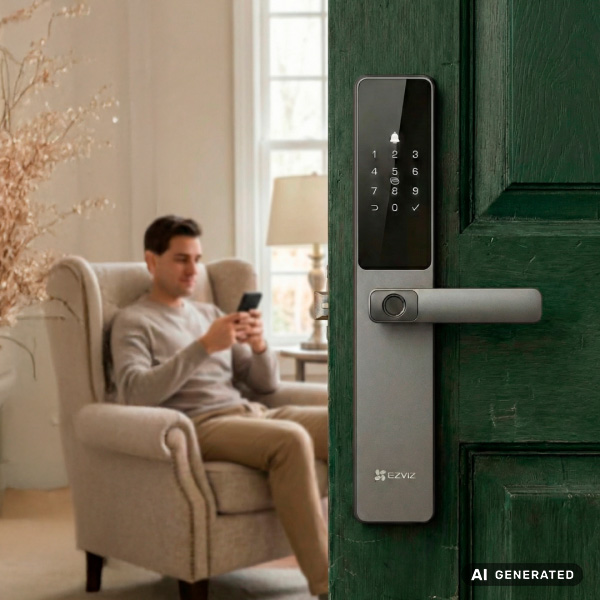
Smart locks do not rely on your home’s electrical grid. Most operate entirely on internal batteries, meaning they continue to provide local access even during a total blackout.
In practice, this means your door remains secure and local entry methods (like fingerprints and keypads) continue to work. The only limitation is that without active Wi-Fi or router power during an outage, the EZVIZ app cannot send real-time entry alerts or support remote controls until power is restored.
Beyond that restriction, physical access remains available through built-in backup methods. This independent power design is essential for reliable, uninterrupted home security.
Smart locks utilize multiple redundant layers of protection to help ensure you are never locked out.
These devices feature exceptional battery life. Depending on usage, they can run for several months on a single set. Additionally, the system alerts you well in advance when power is running low, giving you plenty of time to replace or recharge them.
Even with advanced digital capabilities, high-quality smart locks retain a mechanical keyway. This means you can always use a traditional physical key as a backup in an emergency, even if the batteries are completely dead.
Many models also feature an external power port. This allows you to temporarily power up the lock—for example, using a portable power bank—to unlock the door if the internal batteries ever drain completely.
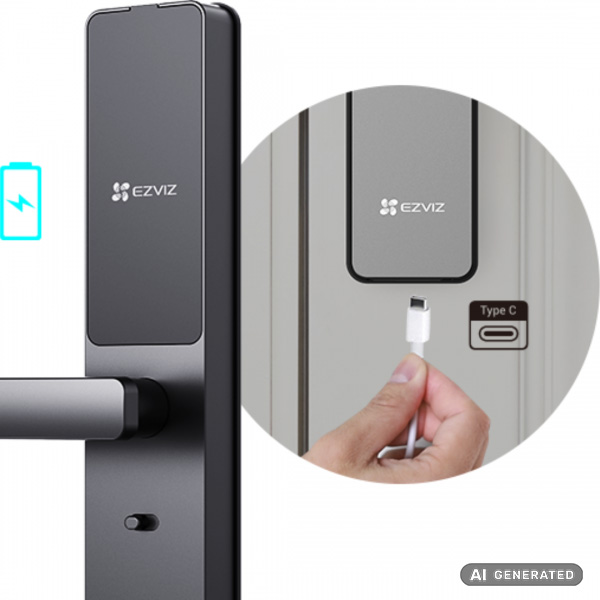
If you are looking to install a smart lock, prioritize these features to ensure performance during power failures:
• Diverse Unlocking Methods: Look for models that combine fingerprint scanning with mechanical keys.
• Robust Fail-safes: Ensure there are low-battery warnings and emergency power ports.
• App Integration: Platforms like the EZVIZ app make monitoring battery levels simple.
With dedicated battery power and multiple mechanical overrides, smart devices are designed to keep your home safe and accessible under almost any circumstances.
No. They are built for ultra-low power consumption. Depending on the model and usage, the batteries typically last for several months before needing a replacement.
Core entry functions—like fingerprints, passcodes, and physical keys—do not require an active internet connection. You will still be able to enter your home locally without any issues.
Depending on the model, smart locks use standard replaceable alkaline batteries or specialized rechargeable lithium packs. If the power runs out completely, you can use the emergency power port or a physical key to gain entry.


 Store
Store