 EZVIZ no longer supports Internet Explorer or earlier versions, and the site may not behave as expected. Please upgrade to a newer browser.

Home security was once simple: lock the door and carry a physical key. For decades, this mechanical approach was the standard for protecting our families and belongings.
Today, the landscape is shifting. As our homes become more connected, smart home technology has introduced a new way to secure your front door. It is no longer just about the physical bolt; it is about managing access, receiving real-time alerts, and knowing exactly who enters your home.
So, what are the practical differences when moving from a traditional lock to a smart system? Let's break down the security, convenience, and management of these two approaches to help you decide which is right for your lifestyle.
Traditional locks rely on a mechanical design where a physical key rotates the cylinder. It’s a reliable, time-tested method, but it has a built-in vulnerability: the key itself. If a key is lost, stolen, or duplicated without your knowledge, your home security is compromised until you physically replace the lock hardware.
A smart lock transitions security from physical objects to digital authentication. High-quality electronic door locks like the EZVIZ DL05 or DL06 verify authorized credentials—such as fingerprints, custom PIN codes, or contactless cards. While these models still include a mechanical key as a failsafe, the digital system allows you to:
• Significantly reduce the risks associated with lost or copied physical keys.
• Instantly revoke access permissions for specific users through an app.
• Monitor entry logs to see exactly when the door was unlocked.
By verifying the user’s specific credentials rather than just the possession of a metal key, you gain a higher level of oversight over who enters your home.
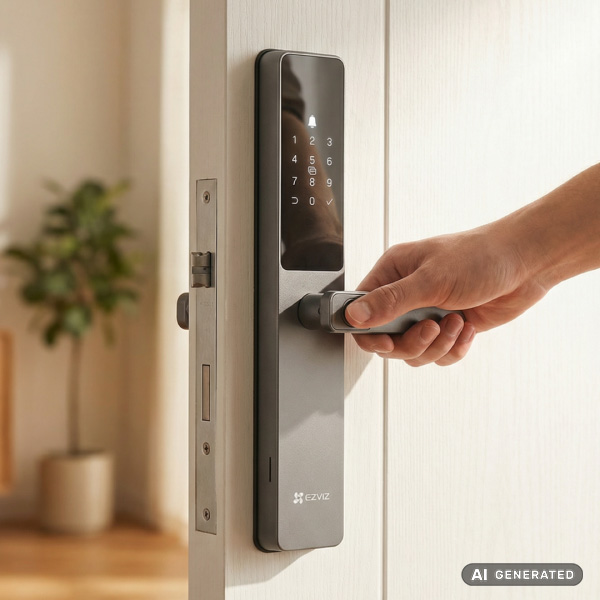
The difference between these two systems is most noticeable in your daily routine. With a traditional lock, forgetting your keys often means an expensive call to a locksmith or waiting hours for a family member to arrive.
A biometric smart lock offers much more flexibility. By integrating with a mobile app, it allows you to manage your home’s entry point from anywhere. This is particularly useful for:
• Keyless Entry: Unlocking the door with a quick fingerprint scan when your hands are full.
• Guest Access: Creating temporary PIN codes for visitors, contractors, or house cleaners.
• Remote Checks: Confirming the door is locked via your smartphone if you left in a hurry.
One area where smart locks clearly stand out is access management. A standard mechanical lock cannot tell you who used a key or at what time they arrived. If you need to stop someone from entering, your only option is to change the physical hardware.
With digital door locks like the EZVIZ DL05, management is handled through software. You can set recurring schedules for specific people—such as a nanny who only needs access on weekdays—and receive real-time notifications the moment the door opens. This level of visibility provides peace of mind that a traditional lock simply cannot offer.
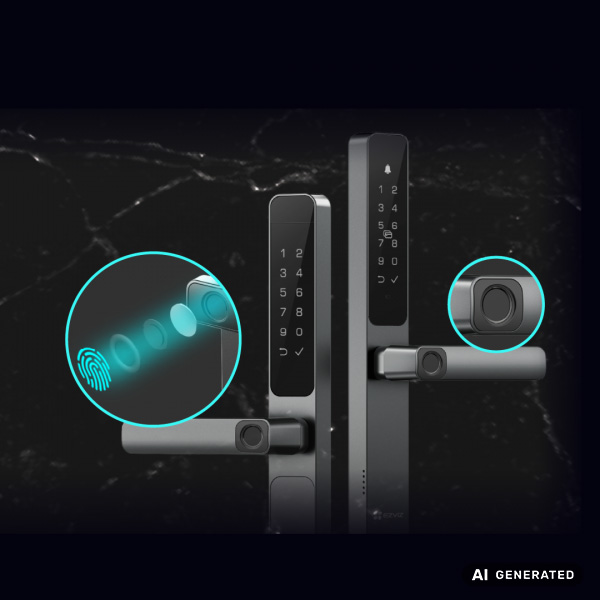
Traditional locks operate in isolation. In contrast, smart locks are designed to be part of a larger ecosystem. When your lock is connected to other devices, it becomes much more than just a barrier.
For example, within the EZVIZ ecosystem, your smart lock can be managed alongside compatible security cameras and video doorbells through a single app. This creates a more synchronized security experience; you can receive a notification the moment a family member unlocks the door and immediately check the camera’s live feed for visual confirmation. This integrated approach ensures you have a complete view of all activity around your front door.
Some homeowners worry that smart locks may be difficult to install or maintain. While these devices are more technologically advanced than mechanical locks, the transition is usually quite smooth.
Most smart locks are designed to fit standard door prep. However, to help ensure reliable mechanical operation and accurate calibration of the deadbolt, we recommend professional installation. An EZVIZ-certified installer can ensure the fingerprint scanner and keypad are performing optimally. In many regions, professional setup also provides the added benefit of an extended warranty.
Maintenance is also simpler than many expect. In most cases, maintaining a smart lock is as simple as replacing the batteries when the app notifies you. Even if the batteries drain completely, these locks feature emergency power ports (like USB-C) and a physical backup key so you are never truly locked out.
The choice between a traditional lock and a smart lock depends on your priorities. Traditional locks offer simplicity, but smart locks provide the control and integration required for a modern home. If you want to manage access remotely and stay informed about your home's security in real-time, models like the EZVIZ DL05 and DL06 are excellent options to consider.
For many homeowners, yes. The ability to issue temporary codes and track entry logs provides a level of convenience and oversight that traditional locks cannot match.
While many offer a DIY-friendly setup, professional installation helps ensure the hardware is perfectly aligned, which prevents wear and tear on the motor and extends the lock's lifespan.
You won't be stranded. Smart locks provide low-battery alerts weeks in advance. If the battery does fail, you can use an external power bank or the included mechanical backup key to enter.


 Store
Store