 EZVIZ no longer supports Internet Explorer or earlier versions, and the site may not behave as expected. Please upgrade to a newer browser.

We’ve all had that feeling of looking back at our house while driving away for a trip, wondering if everything is truly secure. For most of us, leaving our home unattended is inevitable, which is why an outdoor security camera has become such a popular addition to modern homes.
Having a visible camera can often discourage unwanted visitors before anything even happens. It acts like an extra set of eyes whenever you're away from home, allowing you to watch your front door in real time and receive motion alerts on your phone. However, getting the most out of your home security camera requires more than just picking a spot and tightening a few screws. To build a system that actually works when you need it, you need to balance strategic placement with technical performance.
If you are starting with just one outdoor WiFi camera, the front door is almost always the best place to begin. It covers your main entry point, tracks package deliveries, and monitors the most common path visitors take. From there, you can expand to other high-priority zones:
• Driveway and Garage: Essential for keeping an eye on your vehicles and preventing car-related incidents.
• Backyards and Side Passages: These are often hidden from street view, making them vulnerable. A camera here eliminates blind spots where someone could enter unnoticed.
Setting up an outdoor CCTV camera involves a few practical tricks that go beyond the manual:
• The 8-10 Foot Rule: Mount your camera high enough to make it difficult to tamper with, but low enough to capture clear facial details.
• The Sunset Test: Before permanently mounting the device, do a quick test during sunset. This helps you identify if the afternoon glare or long shadows will block your view.
• Live Feed Alignment: Have someone hold the camera in place while you view the live feed in the app. Walk through the detection zone yourself to confirm there are no blind spots before you start drilling.
• Privacy Mindfulness: Be mindful of local privacy regulations when positioning cameras, and avoid recording areas that extend onto neighboring properties whenever possible.
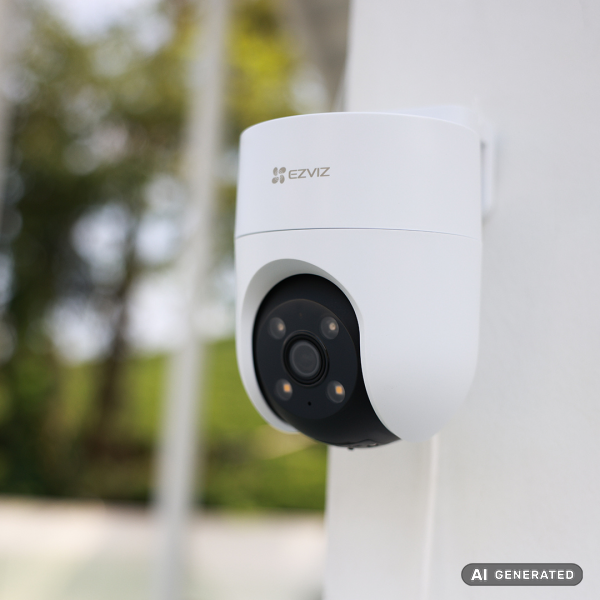
Not every corner of your home requires the same type of lens. Your choice usually comes down to the size of the area:
• Fixed Cameras: Best for "set it and forget it" monitoring of a specific gate or door.
• Motorized (Pan-and-Tilt) Cameras: If you have a wide driveway or a large garden, models like the EZVIZ H8c can rotate, helping cover a wider area with a single device.
• Dual-Lens Innovation: For complex layouts, the H9c Dual is a great choice. It keeps one lens locked on your front door while the other pans around the yard, helping you keep a close watch on your surroundings.
A camera is only as good as its connection. Before installing, confirm that your mounting spot has a stable network connection. For most users, this means checking if your home Wi-Fi reaches the exterior walls. If your router is too far away, consider a Wi-Fi extender.
For remote locations like a detached garage or a far gate where Wi-Fi can't reach, 4G-enabled cameras are a reliable alternative, allowing you to stay connected via cellular networks without needing a router nearby.
Beyond just "recording video," several key features define the performance of a high-quality motion detection camera:
• AI-Powered Detection: Basic motion sensors can be triggered by a blowing leaf or a stray cat. Modern cameras use AI to specifically identify humans and vehicles, significantly reducing annoying "false" alerts.
• Night Vision Technology: Look for models that offer color night vision. Being able to see the color of a visitor's jacket or a car's license plate at 2 AM is a major security advantage.
• Image Quality and Resolution: 2K or 4K resolution helps maintain clarity when you need to digitally zoom in on a specific detail, like a face or a package.
• Weather Resistance: Ensure your camera has a high IP rating (such as IP65 or IP66) to help maintain performance during heavy rain, dust storms, or extreme temperatures.
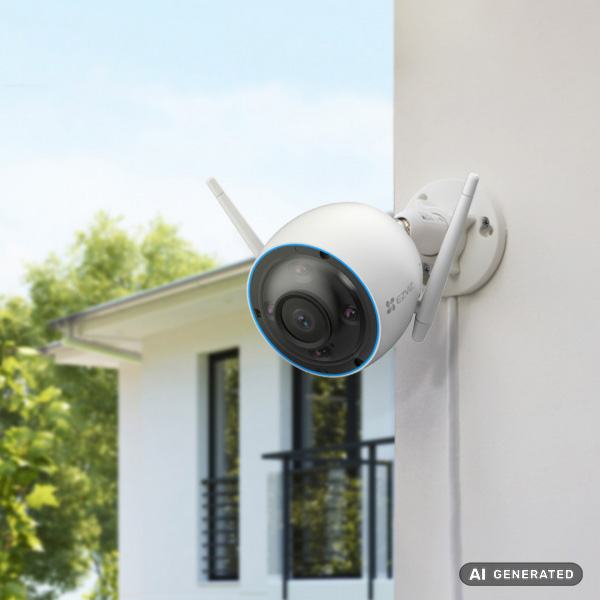
• Identify your "Priority One" zone: If you can only cover one area, start with the front door.
• Check your signal: Test the Wi-Fi or 4G strength at the exact mounting spot before drilling.
• Perform a "Sunset Test": Ensure shadows won't ruin your view in the afternoon.
• Walk-Through Confirmation: Use the live feed to verify your coverage and detection sensitivity in real-time.
By focusing on both placement and these key performance features, you can ensure your outdoor security system provides reliable oversight and protection for years to come.
Yes, provided they are rated for outdoor use. Look for an IP65 or IP66 weatherproof rating, which confirms the device can handle rain, dust, and wind. Models like the EZVIZ H9c and H8c are specifically built to stay operational in these environments.
Traditional motion sensors alert you to any movement, including trees or pets. AI detection focuses specifically on humans and vehicles, meaning you only get notified of events that actually matter, making your security system much more efficient.
Yes. While Wi-Fi is the most common connection, you can use 4G-enabled outdoor cameras for locations without a router. Additionally, most modern cameras can store footage locally on a microSD card, even if the internet connection is temporarily lost.


 Store