 EZVIZ no longer supports Internet Explorer or earlier versions, and the site may not behave as expected. Please upgrade to a newer browser.

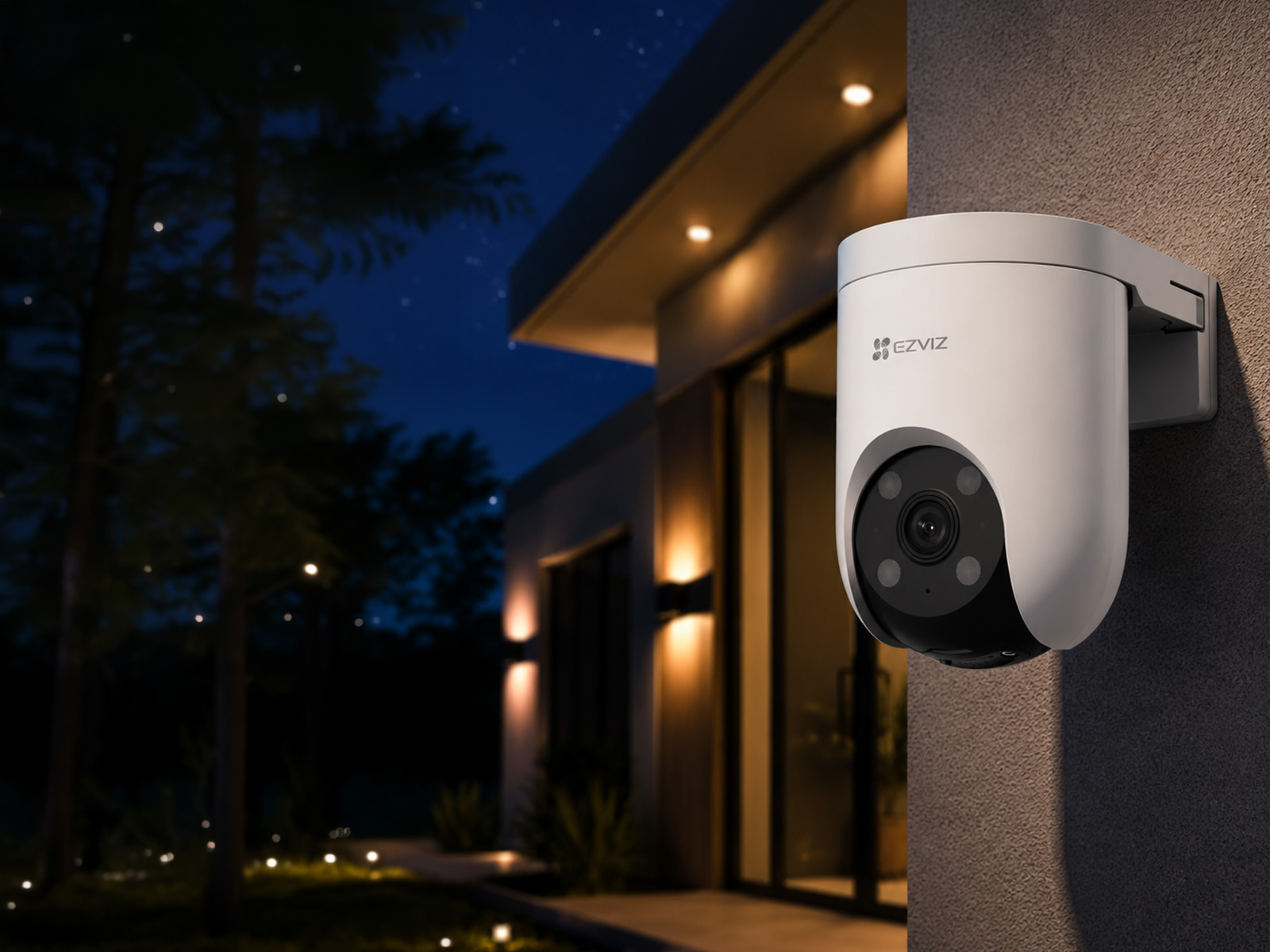
Choosing the right security camera comes down to two fundamental decisions: the power source (mains-powered vs. rechargeable battery) and the network connection (Wi-Fi vs. 4G cellular). A mains-powered Wi-Fi camera is ideal for residential homes with dependable broadband, while a wire-free 4G camera delivers total independence for recreational cabins, construction job sites, or remote properties without access to a fixed network.
Video security has long ceased to be a luxury reserved for corporations or large commercial estates. Residential break-ins and property burglaries remain concerns for many homeowners and property managers. As a result, more homeowners and property managers are deploying smart security cameras to safeguard their families, protect valuables, and enjoy real-time remote visibility—whether they are at work or traveling abroad. Industry leaders such as EZVIZ now offer versatile camera lineups covering every configuration, from standard Wi-Fi models to standalone 4G LTE and hybrid dual-connection cameras, ensuring that every user can configure the right security setup.
If you are purchasing a security camera for the first time, navigating the sheer volume of specifications and technical options can feel daunting. In practice, making the right choice is straightforward once you start with two foundational questions that directly dictate performance and installation feasibility.
Before diving into specifications, ask yourself two essential questions:
• Will the camera run on continuous mains power via an adapter, or on a rechargeable battery?
• Will it connect via local home Wi-Fi, or rely on a 4G mobile cellular data network?
Clarifying these two requirements will immediately filter your options and match the hardware to your physical installation site. Secondary specifications—such as video resolution, night vision clarity, and AI-driven smart detection—can be evaluated in the next phase.
Use the quick decision table below to identify the setup that best suits your situation:
| If you... | The Best Choice Is... |
|---|---|
| Need to monitor a house or apartment with stable Wi-Fi | Wi-Fi Camera |
| Plan to monitor a yard, cabin, job site, or location without fixed internet | 4G Cellular Camera |
| Prioritize continuous surveillance without recharging a battery | Mains-Powered Camera |
| Want quick DIY setup anywhere without running electrical cables | Wire-Free Battery Camera |
Using this framework allows you to find the exact model you need rather than aimlessly comparing dozens of similar cameras. Below, we break down how each category functions, their operational advantages and trade-offs, and where they deliver peak performance.
How your camera is powered determines the complexity of your installation, day-to-day maintenance convenience, and physical placement freedom. The market offers two main approaches: permanently powered (mains-powered) cameras and wire-free battery-powered cameras.
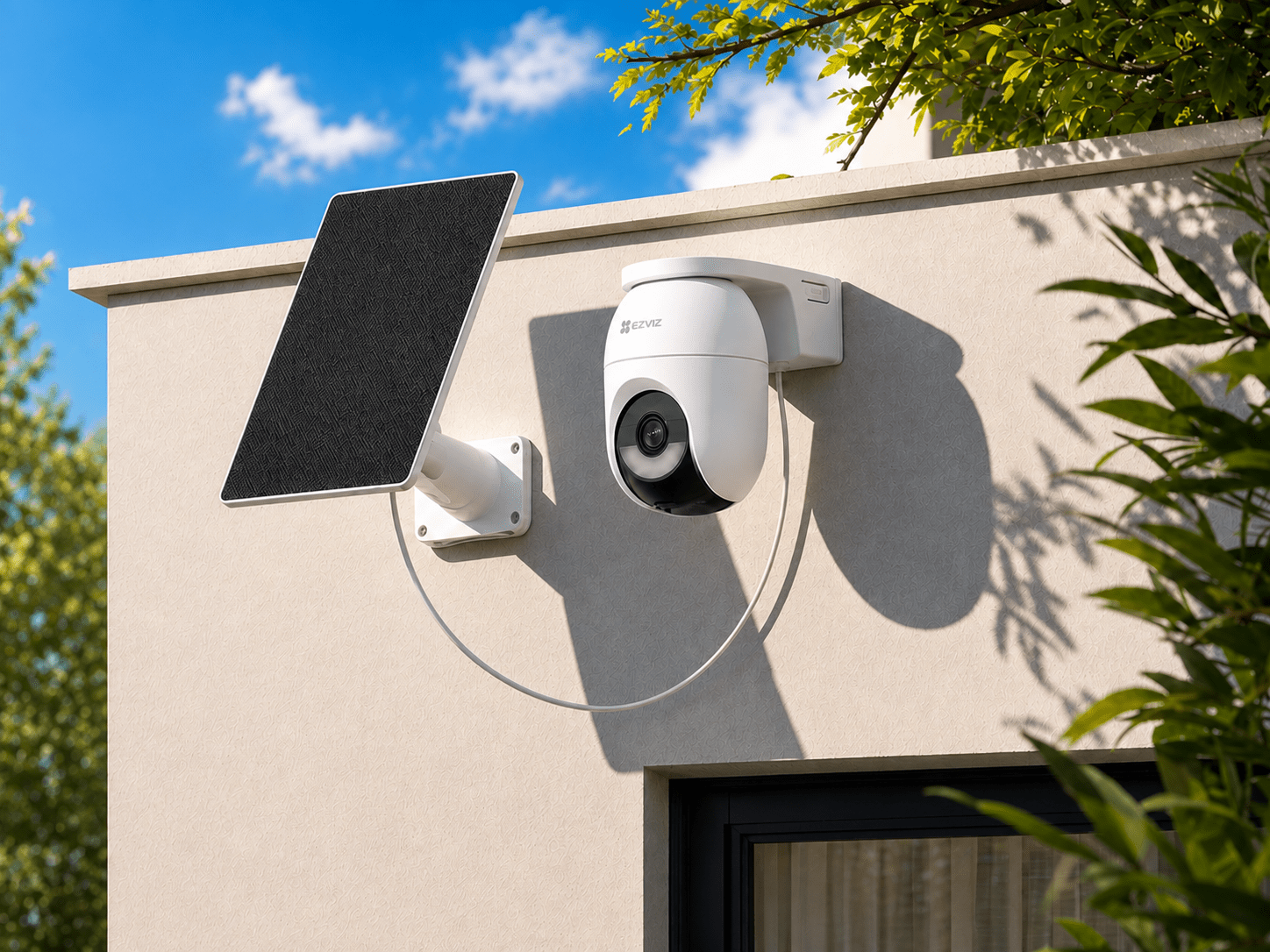
Mains-powered security cameras connect directly to an electrical outlet or dedicated power adapter, providing steady, non-stop power for real-time monitoring and live streaming without worrying about battery drain.
This setup is particularly recommended for primary zones that benefit from steady observation, such as:
• Front entrances and main doorways
• Driveways and vehicle access roads
• Main entry gates and perimeters
• Backyards and residential gardens
• Business parking areas and commercial storefronts
The standout advantage of mains-powered cameras is total freedom from battery management. Once installed, the camera operates continuously without the need to recharge or swap battery packs.
However, installation requires access to a nearby power outlet or running a power cable, making wired setups easiest to implement near exterior outlets or during home renovations.
Wire-free security cameras run on integrated rechargeable batteries, completely eliminating the need for permanent power cords and exterior wiring runs.
This makes them the ultimate choice for renters, DIY enthusiasts, and anyone seeking flexible installation options. A battery camera can be mounted virtually anywhere:
• On boundary fences and property borders
• On detached gazebos, pergolas, and garden sheds
• On detached garages and carports
• On outdoor trees or freestanding posts
• In remote zones situated far from main power outlets
With no power wires to route, installation takes only a few minutes, and you can easily relocate the device whenever your security needs change.
Keep in mind that rechargeable batteries require periodic top-ups. Battery depletion rates depend on trigger frequency, live-view usage, and ambient temperature. Pairing the camera with a compatible EZVIZ solar panel can help reduce manual recharging, depending on sunlight, installation angle, and usage conditions.
| If your priority is... | The Better Choice Is... |
|---|---|
| Continuous power without battery recharging | Mains-Powered Camera |
| Zero battery monitoring or manual recharging | Mains-Powered Camera |
| Effortless installation without drilling power cable holes | Wire-Free Battery Camera |
| Portability and ease of relocation whenever needed | Wire-Free Battery Camera |
| Securing locations situated far from electrical outlets | Wire-Free Battery Camera |
There is no single solution that fits every scenario. For reliable continuous security at fixed building access points, mains-powered cameras deliver steady operation without battery management. If rapid setup, physical versatility, and zero cabling are your goals, a battery-powered camera is the smarter path.
Once power is decided, your next critical choice is connectivity. This determines whether your camera can deliver instant push notifications and smooth live streaming to your smartphone. Next, let’s compare Wi-Fi and 4G cellular connectivity.
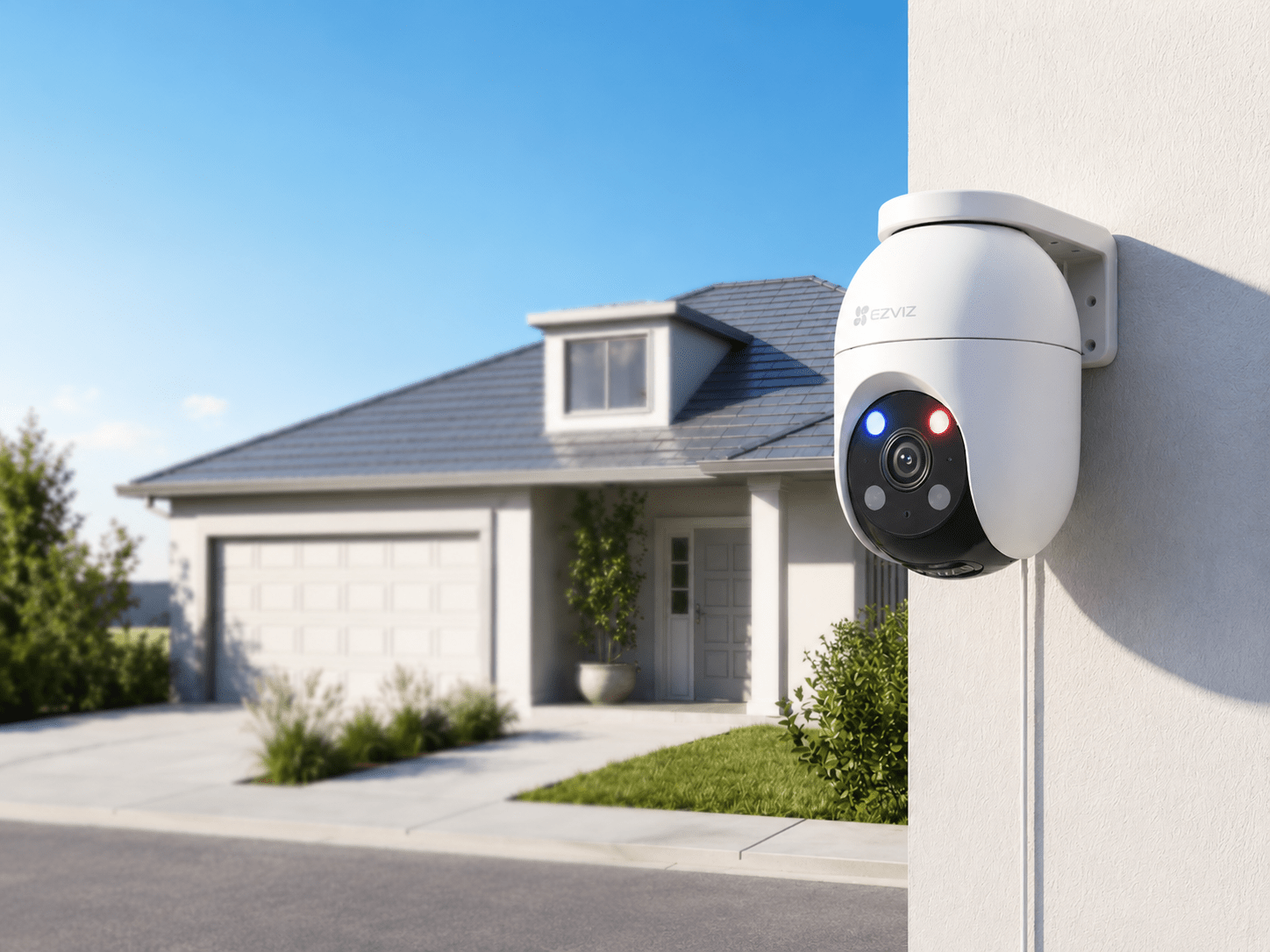
How your camera communicates with the internet directly impacts transmission reliability and remote feature availability. Selecting the wrong network type often leads to dropped feeds or missed alerts.
A reliable internet connection is generally needed for remote live viewing, smartphone alerts, and camera control from outside the local network. AI detection may also be processed locally on supported camera models, depending on the device. Connectivity typically enables:
• Remote live video streaming on your smartphone
• Instant push notifications when motion is detected
• Remote camera configuration and pan-tilt controls from anywhere
• Over-the-air firmware upgrades and secure cloud video access
Always assess the actual signal environment at your designated mounting location before making your final selection.
Wi-Fi cameras link directly to your existing home router and represent the most popular, budget-friendly security solution for residential spaces.
They are ideally suited for:
• Single-family detached homes
• Condominiums and residential apartments
• Attached garages and adjacent carports
• Porches, patios, and backyards within home router coverage
The primary strength of Wi-Fi cameras is plug-and-play simplicity. Because most households already have broadband routers, you do not need dedicated cellular data plans or extra SIM cards.
Furthermore, running costs are economical as you typically avoid a separate monthly mobile data plan.
The main limitation for Wi-Fi cameras is signal reach. Thick exterior walls, concrete barriers, and physical distance can weaken the Wi-Fi signal, causing video buffering or connection drops.
Consequently, standard Wi-Fi cameras are generally not ideal for:
• Remote cabins and recreational garden plots
• Driveway gates located far beyond the main building
• Detached barns and agricultural outbuildings
• Property dead zones that lack reliable Wi-Fi signal reception
For these off-grid or long-range scenarios, a 4G cellular security camera is often the preferred choice.
4G security cameras transmit live video and motion alerts over mobile cellular networks via a micro-SIM or nano-SIM card, operating completely independent of fixed Wi-Fi infrastructure.
These devices can provide remote access where compatible cellular network service is available.
Common application scenarios include:
• Allotment gardens and private recreational plots
• Summer vacation cabins and off-grid chalets
• Active construction job sites and building projects
• Ranches, farms, stables, and agricultural fields
• Remote properties completely devoid of fixed broadband internet
The standout advantage is network autonomy. You can monitor high-risk remote assets where Wi-Fi coverage simply cannot reach.
Not necessarily. The best solution depends entirely on your installation environment.
If your mounting spot receives solid residential Wi-Fi, a Wi-Fi camera is generally simpler and more economical, without ongoing data plan fees.
Conversely, if you need surveillance in locations without fixed broadband, a 4G camera provides dedicated network independence.
| Feature | Wi-Fi Camera | 4G Cellular Camera |
|---|---|---|
| Network Access | Home Wi-Fi router | Cellular data via SIM card |
| Best Use Case | Homes, apartments, areas near the router | Cabins, construction sites, off-grid plots |
| Recurring Costs | Typically avoids a separate cellular data plan | Requires active SIM card & data package |
| Router Dependency | Yes | No |
| Remote Mounting Freedom | Restricted to Wi-Fi range | Suitable for locations with compatible 4G coverage |
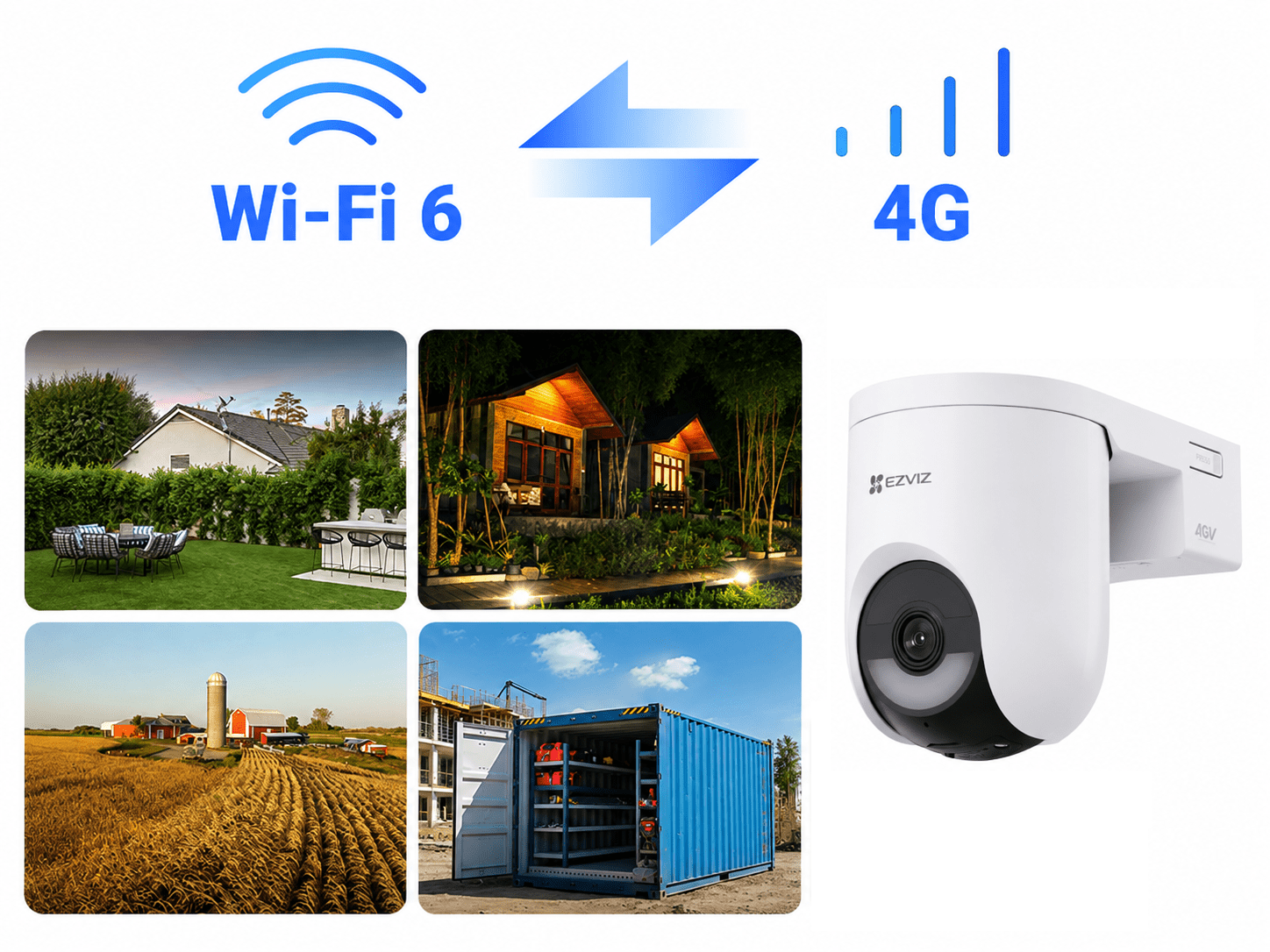
Yes. Some EZVIZ dual-connectivity models, such as the EZVIZ HB8 Lite 4G Kit, seamlessly incorporate both Wi-Fi and 4G LTE cellular connectivity into a single wire-free device.
When configured with a compatible Nano SIM card and an active mobile data plan, the camera can prioritize local Wi-Fi while remaining capable of switching to 4G LTE if the Wi-Fi connection is disrupted.
This dual-connectivity design removes the need to commit to a single networking standard, providing added flexibility across changing surveillance environments.
Dual-mode Wi-Fi + 4G cameras are particularly practical when hardware is periodically moved or deployed in variable conditions:
• Primary residential homes with cellular backup
• Weekend cottages and recreational plots
• Campsites, RV parking, and outdoor travel setups
• Active construction sites transitioning between phases
• Seasonally occupied properties and holiday rentals
A prime example of this setup is the EZVIZ HB8 Lite 4G Kit, which pairs rechargeable battery power, an included 5W solar panel, and dual-mode Wi-Fi and 4G connectivity in one package.
Once you have decided on your power type and connectivity, look for these core features to optimize everyday performance:
Higher resolutions (such as 2K, 3K, or 4K Ultra HD) can provide sharper footage and help capture finer details when zooming in. However, identifying faces or vehicle license plates also depends on the distance, viewing angle, lighting, and movement.
Because many security incidents take place after dark, look for built-in spotlights and high-aperture lenses that provide color night vision rather than standard black-and-white infrared footage.
AI-powered detection can help distinguish people and vehicles from other motion, reducing unnecessary alerts.
Outdoor cameras require dependable weatherproofing. Check the camera’s IP rating and specified operating-temperature range for the conditions at your installation site.
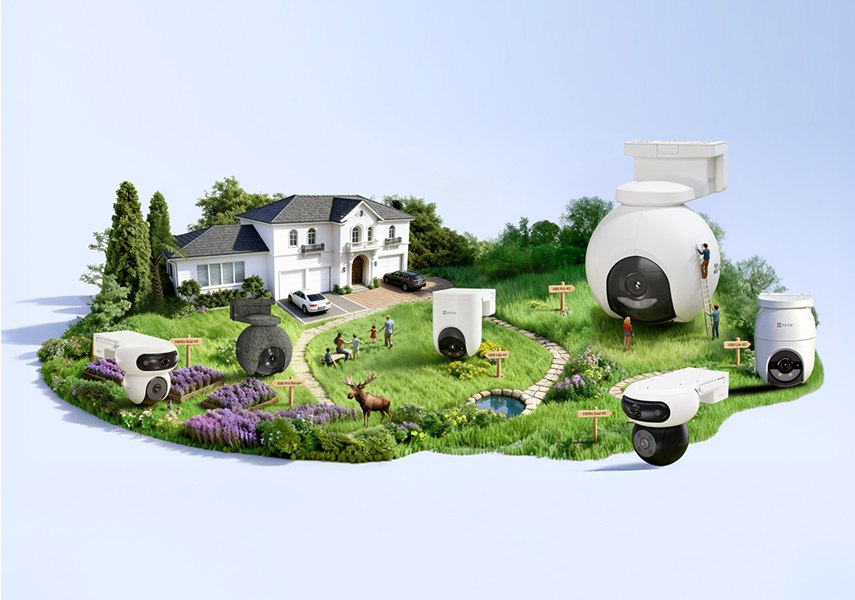
The best camera for you is tailored to your mounting location, network access, power availability, and personal usage requirements.
Before choosing a specific camera, consider these practical questions:
• Where will the camera be mounted?
• Is there stable Wi-Fi, or only mobile cellular coverage?
• Can you easily access continuous mains power via an outlet?
• Do you require a rapid, wire-free installation without drilling power lines?
• Will the camera operate year-round, or only during specific seasons?
When securing an entryway, driveway, garden, or perimeter around a family home, either a mains-powered or battery Wi-Fi camera is typically your best option.
A mains-powered Wi-Fi camera is ideal if you have a nearby power outlet and want uninterrupted operation. Alternatively, a battery-powered Wi-Fi camera delivers rapid installation without running electrical cords.
Key residential monitoring zones:
• Front doors and main entrance points
• Driveways and vehicle parking bays
• Backyards, terraces, and gardens
• Garage doors and perimeter walkways
Recommended EZVIZ solutions:
• EZVIZ C8c 4K – For users looking for ultra-high-definition 4K resolution, pan-and-tilt coverage, and AI-powered human and vehicle detection with mains-powered operation without battery recharging.
• EZVIZ HB8 Lite Kit – For homeowners seeking 2K+ pan-and-tilt surveillance, pure Wi-Fi battery operation, an included 5W solar panel, and rapid cable-free installation.
Recreational garden plots and summer cottages frequently lack fixed broadband connections. In these off-grid spots, a 4G battery camera vastly outperforms a standard Wi-Fi unit.
Equipped with a compatible cellular SIM card (with an active data plan) and an optional EZVIZ solar panel (may be sold separately depending on the package/region), your camera can monitor off-grid locations without local cabling.
Recommended EZVIZ solution:
• EZVIZ EB8 4G – A wire-free, pan-and-tilt 4G outdoor camera designed for areas without Wi-Fi access. Features 2K resolution, pan-and-tilt panoramic viewing, GPS location assistance (most reliable in open outdoor environments), and compatibility with optional EZVIZ solar charging panels (may be sold separately depending on the package/region; requires a compatible SIM card and data plan).
For detached workshops, storage buildings, and agricultural barns situated beyond the reach of household Wi-Fi, look to dedicated mains-powered 4G models.
Choosing cellular communication provides remote access where compatible mobile network coverage is present, without depending on Wi-Fi signal repeaters.
Recommended EZVIZ solution:
• EZVIZ H8c 4G – A mains-powered outdoor pan-and-tilt camera powered by a DC power adapter, delivering cellular 4G or RJ45 connectivity in locations where Wi-Fi is unavailable (please note it does not support Wi-Fi).
When you need off-grid surveillance on construction sites, agricultural properties, or remote perimeter fences where no broadband infrastructure exists, a standalone 4G battery camera is essential.
Recommended EZVIZ solution:
• EZVIZ EB8 4G – Features a 2K resolution sensor, panoramic pan-and-tilt coverage, outdoor GPS location assistance, and compatibility with optional EZVIZ solar charging panels.
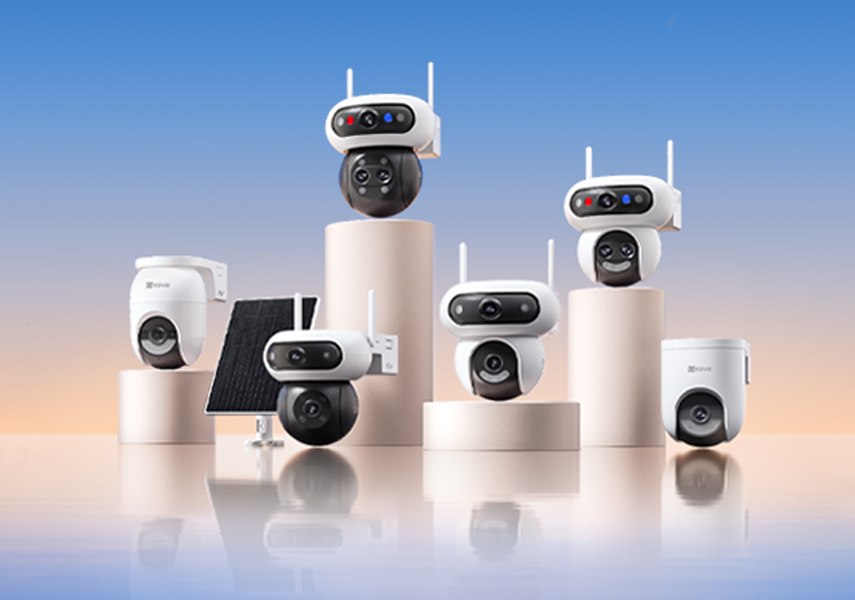
Explore our top-performing EZVIZ security cameras tailored to every deployment scenario:
| Camera Type | Who Is It For? | Recommended Model |
|---|---|---|
| Wire-Free Wi-Fi – For Homes and Apartments | Homeowners and renters with stable Wi-Fi who want quick, cable-free security around doorways and gardens. | EZVIZ HB8 Lite Kit |
| Wire-Free 4G – For Locations Without Wi-Fi | Owners of allotment plots, vacation cabins, or construction sites without fixed broadband access. | EZVIZ EB8 4G |
| Wire-Free Wi-Fi + 4G – Maximum Flexibility | Users seeking the peace of mind of Wi-Fi alongside automated 4G cellular backup redundancy. | EZVIZ HB8 Lite 4G Kit |
| Mains-Powered Wi-Fi – High-Resolution Property Monitoring | Properties with access to permanent power that require high-definition 4K video clarity and wide pan-and-tilt coverage. | EZVIZ C8c 4K |
| Mains-Powered 4G – Remote Locations | Challenging commercial, agricultural, or remote sites requiring constant adapter power without relying on a local Wi-Fi router (supports 4G and RJ45 connection). | EZVIZ H8c 4G |
A Wi-Fi camera can still write event recordings to a local microSD card without internet, but remote live streaming, real-time push notifications, and mobile app access will be disabled until internet service is active. Always ensure a strong, stable wireless signal at your mounting location.
No. Dedicated 4G security cameras communicate entirely through mobile cellular data using a SIM card, making them completely independent of local routers. They are engineered specifically for off-grid properties, construction projects, and remote areas.
Yes. A 4G camera needs an active SIM card provisioned with mobile data. You can opt for a standalone prepaid data package or add a secondary data SIM to your existing mobile family plan. Before buying, check that your preferred carrier has solid signal coverage at the camera's location.
Yes, especially when you need a simple DIY setup without running electrical wiring through exterior walls. Battery cameras are ideal for renters or spots where wiring is impractical. Battery life varies with trigger frequency and ambient temperatures, but adding a compatible solar panel can help extend battery life between manual charges.
Yes, provided you choose a battery-powered model. Battery cameras operate independently of wall power. Pairing a compatible solar panel can help extend battery life and reduce the need for manual charging; performance depends on sunlight, installation, and camera use.
Assess network availability and power access first. If the plot lacks home Wi-Fi, choose a 4G cellular battery camera like the EZVIZ EB8 4G. If reliable Wi-Fi is accessible, a wire-free battery Wi-Fi model or a mains-powered outdoor camera will serve you well.
That depends on property size and layout. While a single pan-and-tilt unit can protect a focused entry path or driveway, larger properties benefit from a coordinated multi-camera system covering the front gate, driveway, side passages, and backyard perimeter.
The ideal security camera is one that fits your installation environment and daily routine. The most expensive camera is not necessarily the best choice—the priority is pairing the right network connection, power source, and feature set to your specific location.
Before purchasing, answer these three decisive questions:
1. Where will the camera be mounted?
2. Does the location offer Wi-Fi, 4G cellular coverage, and access to power?
3. Do you prioritize rapid DIY installation, or continuous operation without battery charging?
Quick decision checklist:
• For rapid, drill-free installation → Pick a wire-free battery camera.
• For continuous operation without charging → Pick a mains-powered camera.
• For residential properties with reliable internet → Pick a Wi-Fi camera.
• For off-grid remote spots without fixed internet → Pick a 4G cellular camera.
• For maximum network redundancy → Pick an EZVIZ hybrid Wi-Fi + 4G camera.
With the right EZVIZ security camera in place, you gain dependable protection, real-time control, and peace of mind—whether you are relaxing at home, working at the office, or traveling halfway across the globe.


 Store