 EZVIZ no longer supports Internet Explorer or earlier versions, and the site may not behave as expected. Please upgrade to a newer browser.

Arriving at your vacation house or vacant property after weeks away often comes with tall grass and accumulated dust. Beyond that, everything might seem fine—but without monitoring, how can you truly know what happened while you were gone? Did anyone trespass? Was there unexpected movement?
In many spaces—such as weekend retreats, detached garages, construction sites, and rural plots—surveillance faces a basic challenge: the lack of electrical outlets and power infrastructure required by traditional security cameras.
This is where solar security cameras offer a practical, self-powered, and increasingly popular solution for monitoring locations that were once difficult to secure.
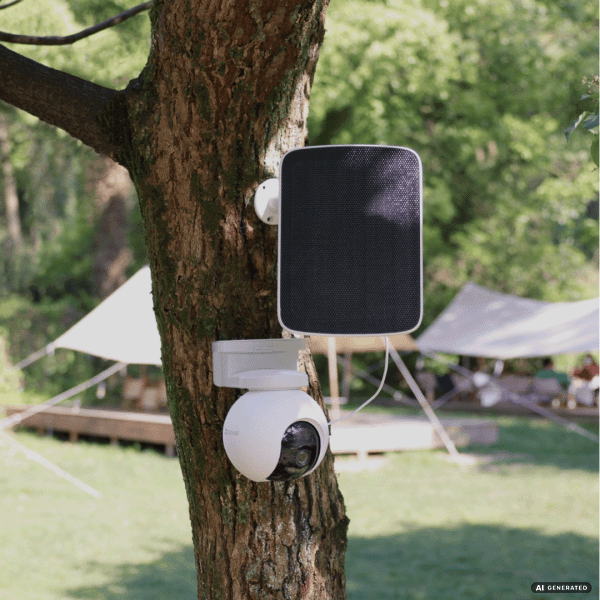
A solar security camera is an outdoor surveillance device powered by solar energy. Instead of relying on the electrical grid, it uses a solar panel to absorb sunlight during the day and convert it into electricity to charge an internal battery.
This allows for installation almost anywhere without trenching or complex wiring. EZVIZ solar security solutions are specifically engineered for outdoor environments, featuring weather-resistant designs built to operate reliably across changing weather conditions.
Many solar cameras also optimize power consumption by remaining in standby until motion or human presence is detected. This smart management extends battery life and ensures that every recorded event is genuinely useful.
Versatility is one of the greatest strengths of a solar security camera. It eliminates dependency on power outlets and labor-intensive wiring.
These cameras prove exceptionally useful for country homes, vacant land, and active construction sites where infrastructure is limited. In these off-grid settings, pairing solar power with 4G cellular connectivity enables reliable monitoring even in areas without any Wi-Fi coverage.
Another major benefit is energy savings. By operating on clean solar energy, these cameras run without adding to your electricity bill, delivering a more sustainable security option.
When it comes to smart functionality, solar-powered models match traditional security cameras point for point. Primary features include:
• AI-powered human and vehicle shape detection
• Night vision performance, including full-color night vision on advanced models
• Two-way audio communication via the mobile app
• Real-time alert notifications sent straight to your smartphone
The EZVIZ security portfolio offers various solar camera options engineered to meet distinct operational needs.
For instance, the EB3 4G is an elegant bullet security camera equipped with a high-efficiency solar panel. It delivers continuous monitoring using EZVIZ's AOV (Always-On Video) technology.
A more advanced alternative is the CB8 Lite 4G. This battery camera is designed for 360° pan-and-tilt coverage and provides reliable connectivity via 4G LTE networks, making it ideal for large outdoor areas where Wi-Fi signals cannot reach.
Among the latest releases is the HB90X Dual 4G KIT. This comprehensive kit includes a solar panel and features dual-lens coverage for ultra-wide monitoring. With support for both 4G and Wi-Fi 6, it ensures you remain connected to your property regardless of the local infrastructure.
👉 Read also: How to Start Automating Your Home Security
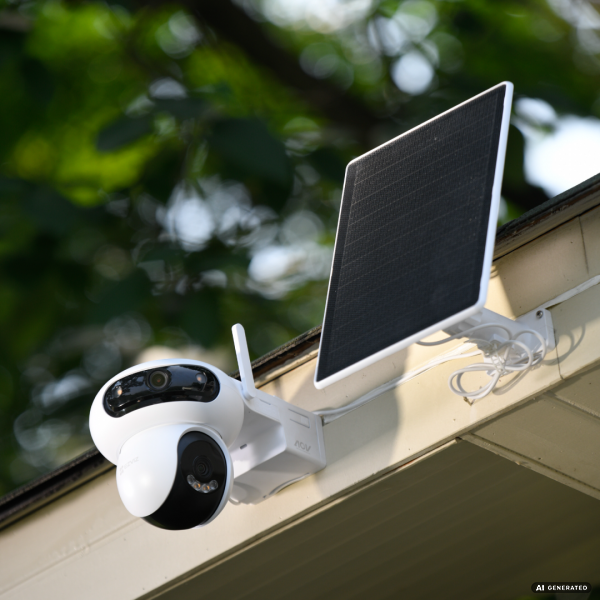
While they do not replace every type of camera, solar security cameras are clearly the best choice in specific scenarios:
• Locations without access to grid electricity
• Properties where running electrical wiring is too expensive or disruptive
• Expansive yards or perimeters requiring flexible mounting options
Before installing a solar security system, evaluate a few key factors to guarantee dependable performance.
Sunlight exposure is crucial: mount the solar panel where it receives ample direct sunlight. Battery storage capacity is also critical for extended overcast periods. In regions with frequent rain or short winter days, choosing a model with a high-capacity battery is essential.
Finally, consider your network. Wi-Fi suffices for standard homes, but for isolated sites, 4G cellular models provide the only way to achieve continuous real-time monitoring.
👉 Read also: WiFi vs 4G Security Cameras: Which One Should You Choose?
Yes. The internal battery charges during the day and provides power for the camera to monitor and record normally throughout the night.
The camera continues to run on power stored in its battery. High-efficiency solar panels can also generate electricity from ambient daylight, even on cloudy days.


 Store
Store